Take away three things
- Give every observation an asset, time and context.
- Preserve the source when a value becomes a recommendation.
- Define the qualified review needed for physical consequences.
The physical world supplies constraints
An equipment record can include a drawing revision, component identity, inspection or observation. A device can supply a measurement under particular operating conditions.
The digital model should retain those conditions. A unit, calibration state or changed configuration can alter whether information is suitable for a decision.
The AISCaffold direction
The portfolio’s equipment concepts connect asset relationships, proposed sensor inputs, telemetry and work-pack review. AI Chief Engineer adds a related specification direction for technical checks.
The illustrated interfaces show a design experience. They do not establish a manufactured sensor system, verified field integration or professional engineering approval.
Computing is also physical
RAM-X considers which authorised devices and services are suitable for a workload. Memory, transfer, compatibility, energy and recovery influence whether a proposed arrangement is useful.
The relevant comparison is the accepted task outcome under measured conditions, rather than a sum of unrelated hardware specifications.
Design a testable hand-off
For a physical-system proposal, record the observation source, the proposed interpretation, the check and the person responsible for a consequential decision. Then define how to test each link.
The idea in one view.
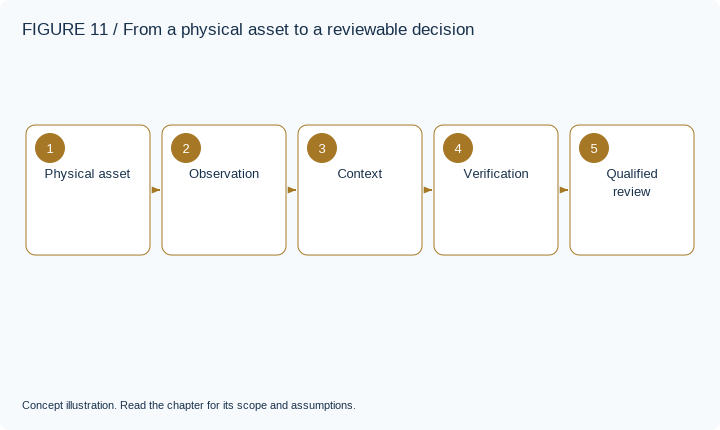
Conceptual explanation. The article states its assumptions and scope; illustrative inputs are identified within the figure.
Keep the observation connected
- Identify the asset
- Record conditions
- Check the interpretation
- Qualified review
A conceptual sequence. Follow the linked reading for context and boundaries.
Basis and scope
Public explanation based on the AISCaffold design materials, AI Chief Engineer specification direction and RAM-X engineering blueprint. Hardware, safety and operational claims require their own test and professional review evidence.